 St Catherine's Monastery Tours
Best Time of Year to Visit St Catherine's Monastery: Month-by-Month Guide
Last reviewed September 2026
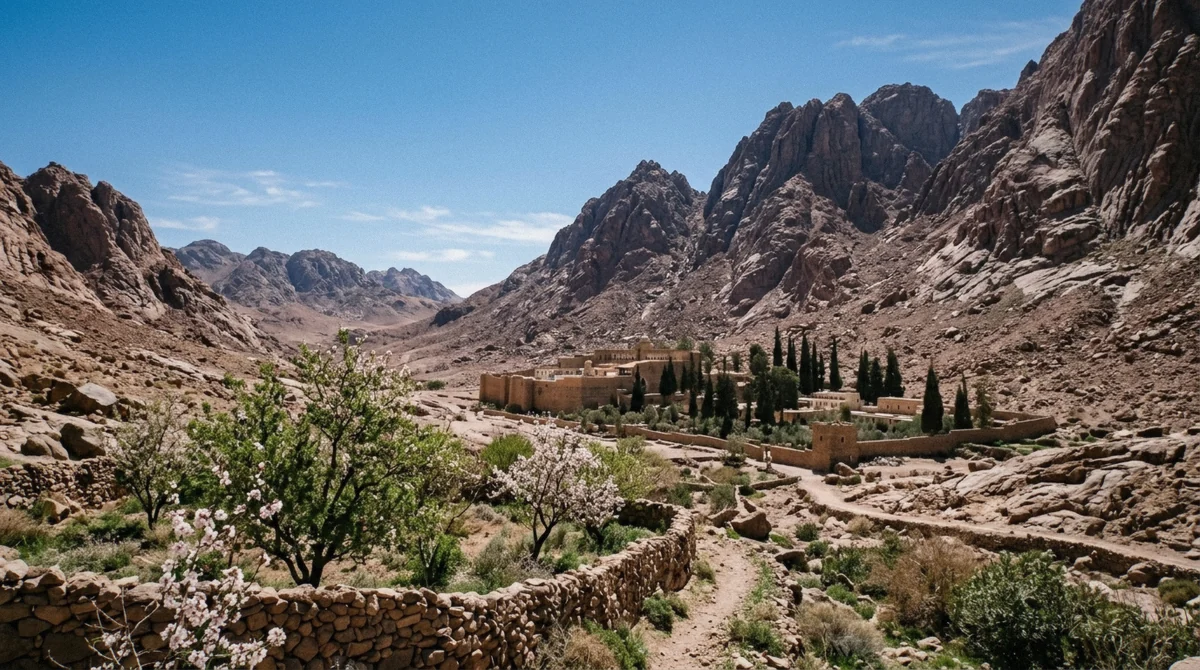
The best time to visit St Catherine Monastery is October to November and March to April, when the pre-dawn climb up Mount Sinai stays cool, the monastery courtyard sits at a comfortable daytime temperature and the sky over the mountain is reliably clear. Winter is the honest runner-up: the trail empties out if you carry real cold-weather layers, since the summit drops toward freezing well before dawn. Skip the early-May and early-December feast-day clusters, when the gate shuts outright, and skip Sundays altogether, since the monastery is closed every week regardless of season. The month-by-month breakdown below, plus the temperature table pulled from Saint Catherine's own climate record, narrows the calendar down to St Catherine Monastery tours in every season.
Quick answer October-November and March-April win, winter is the cold-weather runner-up
October to November and March to April give the coolest climb and the mildest courtyard weather of the year. Winter is the quiet runner-up if you pack for real cold. Avoid the early-May and early-December feast closures, and every Sunday.
Key takeaways
- October to November and March to April combine a cool pre-dawn climb with a mild courtyard, the two most comfortable windows of the year
- Winter (December to February) empties the trail if you carry real cold-weather layers; the summit drops toward freezing before dawn and snow falls in some winters
- Avoid the feast-day clusters in early May and early December, when the gate shuts outright, and every Sunday, when the monastery is closed regardless of season
- Summer valley highs above 30 degrees Celsius make the pre-dawn climb the only comfortable window; sunrise lands near 5 am in summer, closer to 6:30 in winter
- A sunset climb runs quieter and warmer than the sunrise crowd, an option worth weighing on the private climb with a Jebeliya guide
- Dressing for three temperature zones in one night gets the short version in what to wear for the Mount Sinai hike
Seasons at a Glance
St Catherine's climate swings from valley highs above 30 degrees Celsius in summer to summit temperatures near freezing on a winter dawn, and the table below reads season first, then narrows to month-by-month figures for the trip already on your calendar.
How the four seasons compare
Read the Verdict column first: it names the trade-off in three to five words before the detail underneath fills in the reason.
| Season | Weather | Summit before dawn | Crowds and closures | Verdict |
|---|---|---|---|---|
| Autumn (September to November) | Warm days cooling fast toward evening | Cool, a fleece is enough | Moderate; feast closures cluster in late September | Best overall |
| Winter (December to February) | Cold, occasional snow, record low -6 degrees Celsius | Near freezing, real cold-weather layers needed | Low outside the early-December feast cluster and Orthodox Christmas on 6-7 January | Quiet, cold-ready only |
| Spring (March to May) | Mild, warming quickly through April | Cool at dawn, comfortable by mid-morning | Rising through April; early-May feast closures ahead | Best overall |
| Summer (June to August) | Hot by day, valley highs above 30 degrees Celsius | Mild at dawn despite the heat below | Moderate; Ramadan can shift pickup times | Hot valley, doable dawn |
Month-by-month temperatures
Saint Catherine's climate record breaks the year into twelve distinct months, and even neighboring months sit several degrees apart on the mean column below.
| Month | High | Low | Mean |
|---|---|---|---|
| January | 13.8°C (57°F) | 1.7°C (35°F) | 9.5°C (49°F) |
| February | 14.6°C (58°F) | 2.4°C (36°F) | 10.2°C (50°F) |
| March | 18.5°C (65°F) | 5.7°C (42°F) | 14.2°C (58°F) |
| April | 24.1°C (75°F) | 10.1°C (50°F) | 19.0°C (66°F) |
| May | 27.9°C (82°F) | 14.1°C (57°F) | 23.1°C (74°F) |
| June | 30.9°C (88°F) | 16.2°C (61°F) | 25.4°C (78°F) |
| July | 32.0°C (90°F) | 17.7°C (64°F) | 26.5°C (80°F) |
| August | 32.0°C (90°F) | 17.6°C (64°F) | 26.0°C (79°F) |
| September | 30.5°C (87°F) | 15.9°C (61°F) | 24.7°C (76°F) |
| October | 25.7°C (78°F) | 12.0°C (54°F) | 19.8°C (68°F) |
| November | 19.9°C (68°F) | 7.4°C (45°F) | 14.7°C (58°F) |
| December | 15.7°C (60°F) | 3.7°C (39°F) | 11.1°C (52°F) |
What the Numbers Say
One read-out before the seasonal detail: the hottest and coldest months are further apart than most travelers expect.
July and August run hottest with a mean near 26.5 degrees Celsius, January is coldest at a 9.5 degree mean, and the record low on the books is -6.0 degrees Celsius, cold enough that snow settles on the higher ground in some winters. Figures are 1961-1990 means for Saint Catherine, Egypt on Wikipedia; check the forecast close to your dates rather than relying on a long-term average alone.
Best Season by Traveller Type
If You are climbing Mount Sinai for the first time
Book October or March: the trail is cool, the crowd is manageable and a weather cancellation is unlikely. See the most-reviewed climb from Sharm.
If You want photographs of the summit and the valley below
Choose November or April, when the air is clearest and the haze from summer heat has not built up yet.
If You are travelling with children
Pick the cooler shoulder months and consider the private monastery-only day, which skips the climb altogether.
If You are watching the budget
Winter weekdays outside the feast cluster draw the smallest crowds and the easiest availability, though you still need real cold-weather layers.
If You are visiting as a pilgrim for the Burning Bush and the church
Avoid Sundays and the printed feast dates outright; the gate is closed regardless of season. Check the full closure calendar before booking.
Autumn (September to November): Best Overall
The season opens cooling from summer's peak and closes with the year's mildest week for the climb.
September opens cooling from summer's peak, and by November the valley has settled into daytime highs in the high teens to low twenties Celsius, cool enough that midday sightseeing at the monastery courtyard feels comfortable rather than draining. The pre-dawn climb up Mount Sinai in these months rarely needs more than a warm mid-layer under a windbreaker, since the coldest air arrives just before sunrise and burns off within the hour. Crowds build gradually through the season and thin out again once the feast closures in late September (the 21st and 27th) pass.
Booking two to three weeks ahead covers most autumn dates comfortably, though the two weeks either side of the September closures fill faster. The $51 sunrise tour runs daily through the season and is the easiest way to lock in an October date before the shoulder-season rush.
- Daytime highs settle into the high teens to low twenties Celsius by November
- Pre-dawn climb needs a warm mid-layer, not a full winter kit
- Feast closures fall on 21 and 27 September; the rest of the season runs open
- Book two to three weeks ahead for the best pick of departure times
Winter (December to February): Quiet, Cold-Ready Only
The emptiest stretch of the year on the mountain, for a reason that has nothing to do with interest.
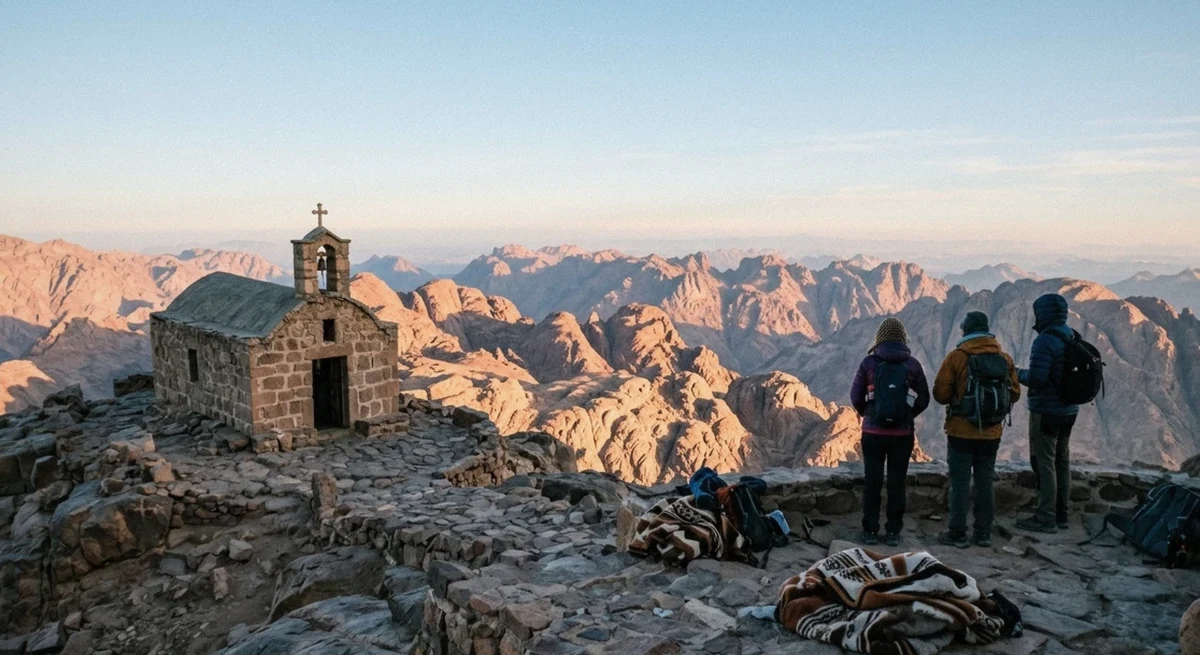
December through February is the emptiest stretch of the year on the mountain, and the reason is the cold rather than any lack of interest: the summit sits near freezing well before dawn, snow settles on the higher ground in some winters, and the record low on the books is -6 degrees Celsius. Sunrise lands closer to 6:30 in winter rather than the 5 am start of a summer climb, which at least buys back some sleep. The trade-off is real solitude on the trail, thinner queues at the monastery gate, and the two windows to build a trip around are the weeks between the early-December feast cluster and Orthodox Christmas on 6 and 7 January, and the back half of February once the holiday traffic clears. The private climb with a Jebeliya guide is worth the extra cost here: setting your own pace matters more when the cold cuts into rest stops.
- Summit temperatures sit near freezing before dawn every winter
- Snow settles on higher ground in some years; the record low is -6 degrees Celsius
- Early-December feast closures and Orthodox Christmas (6-7 January) both cut into the calendar
- Real cold-weather layers, not a light jacket, are the trade for the thinnest crowds of the year
Spring (March to May): Best Overall
March opens cool and stays comfortable through April, before May turns the valley hot fast.
March opens spring cool and stays comfortable through April, with the valley warming steadily into the high twenties by early May. This is the other half of the year's best window: the climb is cool enough to attempt without dawn frostbite worries, and the courtyard sits at a pleasant daytime temperature for the two to three hours most tours spend inside the walls. The season narrows fast at the end, though.
The early-May feast cluster (the 1st, 2nd, 3rd, 4th and 6th) shuts the gate on five separate dates inside one week, so a late-April or very-early-May booking needs the closure calendar checked first. The most-reviewed climb from Sharm runs through the season on a schedule built around those closures.
- March and April are the coolest, most comfortable months for both the climb and the courtyard
- May opens hot fast, with valley temperatures climbing toward the high twenties Celsius
- Five feast closures cluster in the first week of May; check dates before booking late
- Book three to four weeks ahead for the peak March-April window
Summer (June to August): Hot Valley, Doable Dawn
The valley runs hottest of the year, but the mountain keeps its own colder climate at every hour.
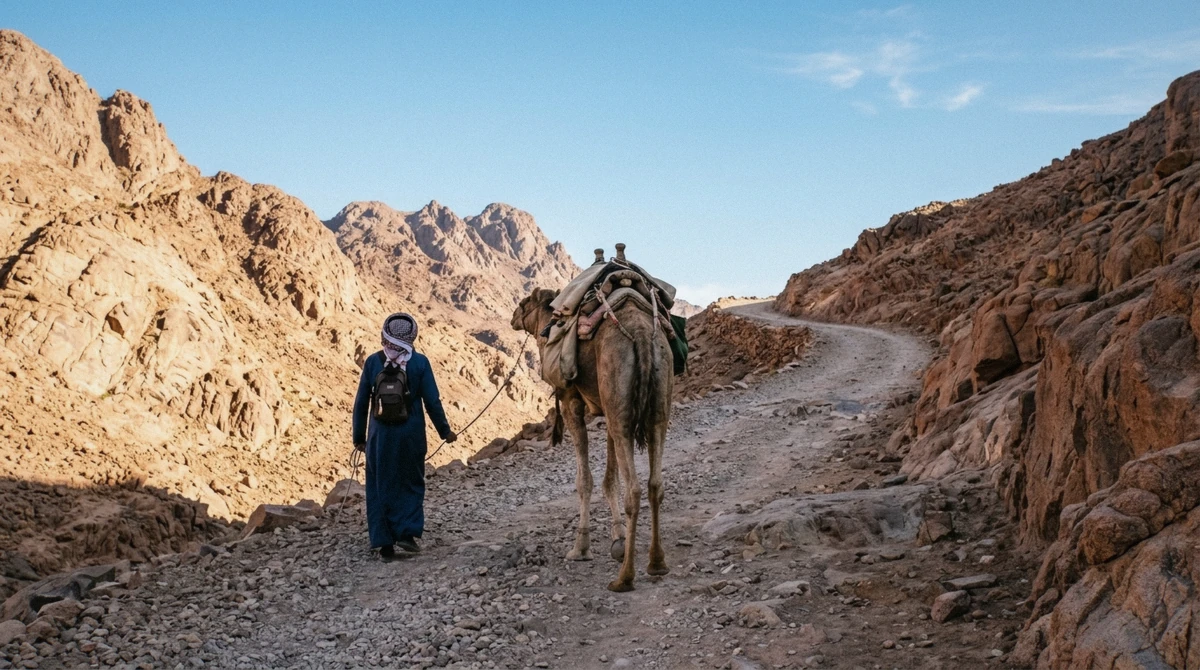
June through August brings the hottest weather of the year to the valley floor, with daytime highs sitting at 30 to 32 degrees Celsius and little relief until evening. The mountain itself stays workable, since the climb starts at about 2 am and the summit runs markedly colder than the town below in every month, including August. What changes in summer is the daytime visit: standing in the open courtyard at midday is a different experience from the same walk in October, and travellers who skip the climb altogether tend to prefer summer's early-morning private visits instead.
Ramadan can also fall in these months depending on the year, and pickup times on some tours shift around the fast, so it is worth confirming timing directly with the operator rather than assuming a fixed schedule. The private monastery-only day times its visit for the cooler hours and skips the midday sun altogether.
- Valley highs run 30 to 32 degrees Celsius in June, July and August
- The mountain climb still starts near 2 am, well before the day's heat builds
- Ramadan, when it falls in summer, can shift pickup and visit times
- A private daytime visit that skips the climb suits summer heat better than a courtyard stop at noon
What Actually Affects Conditions
The calendar is only half the story; altitude does the rest of the work.
Most people assume the calendar alone decides how cold the climb feels. Altitude does more of the work: the town of Saint Catherine sits at 1,586 metres and the summit at 2,285 metres, a roughly 700-metre climb that puts the top of Mount Sinai in a different temperature band from the valley in every single month, including August. That is why a sweatshirt is enough on a July night at the summit even when the valley below is still warm at midnight, and why winter dawns on top run close to freezing while the town a few hundred metres lower sits several degrees warmer.
The climb itself takes about two and a half to three hours up the camel path (roughly 4 km) plus the final 750 stone steps, regardless of season, so the time spent on the mountain in the cold is largely fixed; only the starting temperature changes with the month. For the full step-by-step timing, see climbing Mount Sinai for the first time.
Best Time of Day
Sunrise is the default booking, but it is not the only option.
Sunrise is the default: most tours have you on the summit by dawn, which lands near 5 am in summer and closer to 6:30 in winter, in time to watch the light come up over the Sinai peaks. The trade-off is company: the summit is at its most crowded right at that moment. A sunset climb is the quieter alternative, worth asking about directly with an operator, since it starts in the afternoon warmth, avoids the pre-dawn cold entirely and puts you on the descent after dark with the guide's torch rather than climbing in it.
Either way, the monastery itself keeps its own short window regardless of when you climb: roughly 8:45 to 11:30 most days, one hour only on Friday, closed on Sunday, so the summit schedule and the monastery visit need planning around each other rather than treated as one continuous morning.
Crowds and Closed Days Through the Year
Closures follow a religious calendar, not the tourist season, and that catches first-time planners out.
The monastery closes for a set list of Orthodox feast days scattered across the year, plus every Sunday without exception; the full calendar of closed dates lives on the homepage and is worth checking against your exact travel dates rather than relying on a rule of thumb. Two recurring windows matter most for planning: Orthodox Easter, which moves on its own calendar and can land weeks apart from the Western date, and Orthodox Christmas on 6 and 7 January, both of which close the gate regardless of season. Ramadan affects tour logistics rather than the monastery's own calendar: pickup times on some operators shift around the fast when it falls during the travel season, so confirm timing directly rather than assuming the usual departure window.
Weekend departures are also worth a second look, since a Saturday-night climb puts you at the monastery gate on a Sunday morning, when it is closed.
So, When Should You Go?
October to November and March to April remain the two windows worth building a trip around: cool climbs, mild courtyards, and manageable crowds outside the specific feast dates. Winter is the honest budget alternative if you pack real cold-weather layers and don't mind a cold, quiet summit. Summer works for the climb itself, since the mountain stays cooler than the valley at every hour, but plan a private daytime visit rather than a midday courtyard stand if the heat is a concern.
Whatever the month, check the sunrise tours from Sharm El Sheikh against the closure calendar before you book.
Best Time to Visit: Frequently Asked Questions
Which month is best for climbing Mount Sinai?
October, November, March and April are the most comfortable months, combining a cool pre-dawn climb with a mild daytime temperature at the monastery. Winter is the cold-weather runner-up, and summer works for the climb itself but turns the daytime valley visit hot.
Is winter too cold for the Mount Sinai sunrise hike?
Not if you pack for real cold: the summit sits near freezing before dawn from December to February, and layers matter more than the month itself. The full packing breakdown is in what to wear for the Mount Sinai hike.
Does it snow at St Catherine's Monastery?
Snow settles on the higher ground in some winters, mostly December through February, and occasionally in late autumn or early spring. The record low on file is -6 degrees Celsius, so a snowfall is a real possibility rather than a rare fluke.
How far ahead should I book a St Catherine tour?
Two to three weeks covers most autumn and winter dates comfortably. Around the peak March-April window, and on either side of the feast closures in late September and early May, book three to four weeks out for the best pick of departure times.
Is summer too hot to visit St Catherine's Monastery?
The valley runs hot, with daytime highs of 30 to 32 degrees Celsius, but the climb itself starts near 2 am and the summit stays markedly colder than the town below in every month. A private daytime visit that skips the midday courtyard sun suits summer better than a standard sunrise-tour stop.
Is sunrise or sunset better on Mount Sinai?
Sunrise is the standard booking and the more crowded one. A sunset climb runs quieter and warmer, starting in the afternoon and descending after dark with the guide's torch, though it needs asking about directly since most listed tours default to sunrise.
Picking the month is the easy half of planning a Mount Sinai climb; the trickier half is matching a departure to a specific tour's schedule, since closures, Ramadan shifts and feast dates move the calendar around even within the best season. Once the month is set, what to wear for the climb and climbing Mount Sinai for the first time cover the parts of the trip that don't change with the calendar.