 St Catherine's Monastery Tours
What to Wear and What to Bring for the Mount Sinai Hike and St Catherine's Monastery
Last reviewed September 2026
What to wear for Mount Sinai hike is a short list, because the tours compared here handle the two hardest pieces themselves: a licensed guide walks with every group, and thick blankets are for rent at the last hut before the final steps. The real trick is dressing for three different places in one night, a sweaty climb in the dark, a freezing summit before dawn, and a monastery gate the next morning that refuses shorts and sleeveless tops outright. Pack for all three and the list barely fills a small day bag. The full breakdown, plus what each operator hands you at the start, sits below on the monastery and Mount Sinai tours compared.
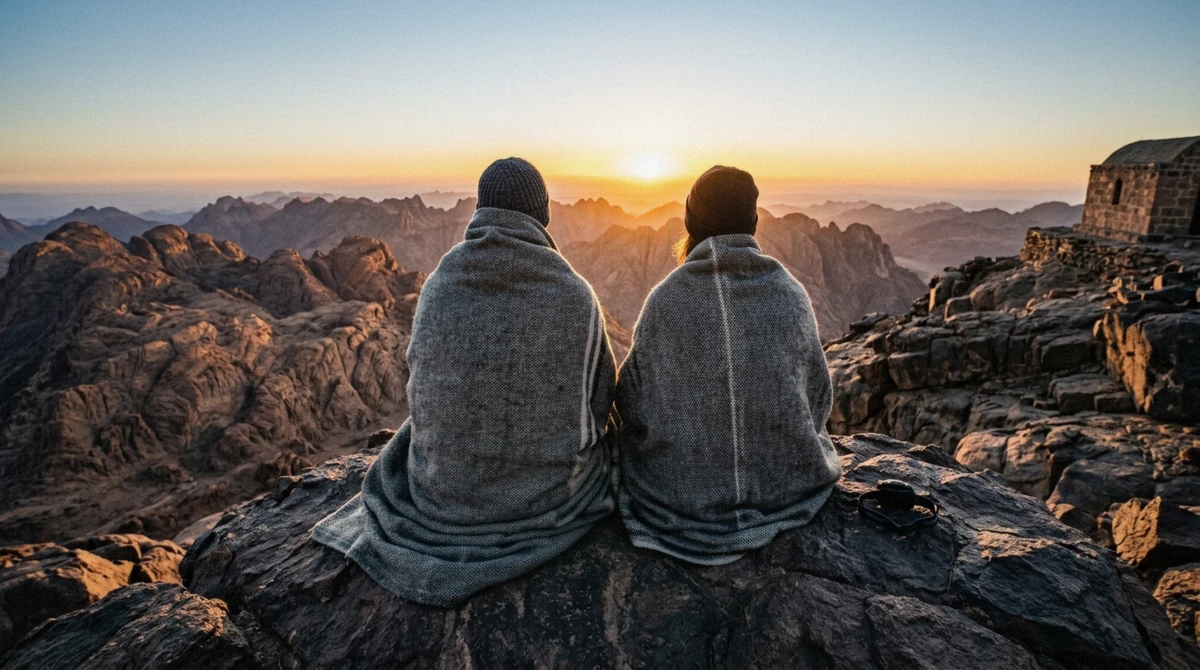
Quick answer Tours provide the guide and transport; the rest fits a small day bag
Tours provide the guide and the transport; blankets rent for about 200 Egyptian pounds at the last hut. What's on you is a warm layer, a headtorch and long trousers for the monastery gate. Sleeveless tops and shorts get turned away at the door.
Key takeaways
- The guide, the transport and the park permit are handled by every tour; blankets rent for about 200 Egyptian pounds at the last hut before the summit
- Dress for three places in one night: a sweaty climb, a freezing summit and a monastery gate that checks for covered shoulders and knees
- Sleeveless tops and shorts are refused at the gate outright; carry a layer you can put on even if you climbed in less
- The summit runs near freezing from December to February and stays cool even in July, when a sweatshirt was enough for one climber
- A headtorch and a walking pole are the two most-forgotten items, and both matter more than anything else on a typical packing list
- Full seasonal figures for the climb itself are in the best time to visit guide; the short version is below
What to Wear
The climb isn't technical, just long and cold: ordinary layered hiking clothes handle the terrain fine, and it's the temperature swing across the night that trips people up, not the difficulty of the path itself.
Base layer
A moisture-wicking base layer, synthetic or merino, top and bottom, does the real work on the climb itself: the effort of the camel path and the final 750 steps means sweating even on a cold night, and cotton next to skin stays wet and cools fast once you stop moving at the summit. Quick-dry leggings or lightweight hiking trousers underneath work better than jeans, which restrict movement on the steps and take hours to dry if they get damp.
Warm and windproof layers
Add a fleece or a light insulated jacket over the base layer, and a windproof shell on top for the summit itself, where wind cuts harder than the thermometer alone suggests. The blankets rented at the last hut, for about 200 EGP, cover the worst of the wait for sunrise, but they are a supplement to your own layers, not a replacement, since the hut can sell out on a busy night. A hat and gloves matter from November through March, when the summit sits close to freezing before dawn.
Footwear
Closed-toe shoes with real grip, trail runners or light hiking boots, handle the loose gravel on the camel path and the worn stone of the final steps far better than sandals or fashion sneakers. Ankle support helps on the descent, when tired legs and loose stones catch out first-timers most. Leave heels, flip-flops and anything without a back strap at the hotel.
The monastery layer: long trousers and sleeves
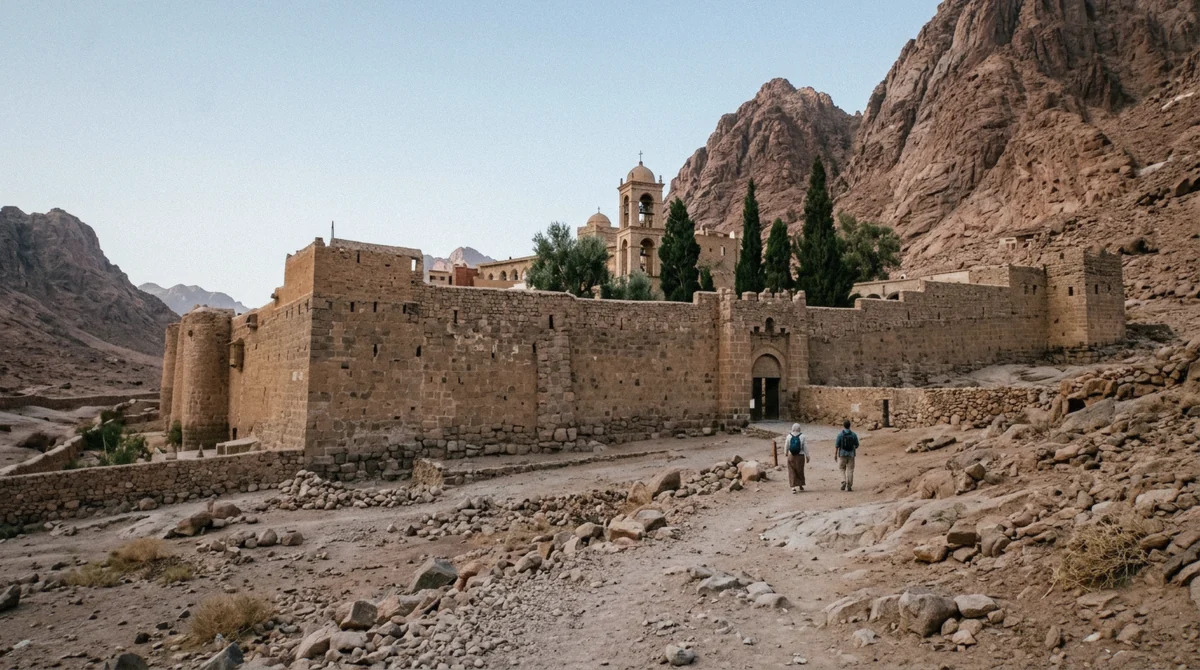
Whatever you climb in, carry, or already be wearing, long trousers and a top that covers the shoulders for the monastery visit after sunrise. A light long-sleeve layer that packs small, or a scarf big enough to cover bare shoulders, solves this without adding real weight to the climb itself. A reviewer in July 2026 was refused entry in shorts, so this is not a theoretical rule.
What to Bring
Beyond what's on your back, a short flat list covers the rest, most of it small enough for a day bag.
The packing list
None of these are handed out at the trailhead, and each one solves a specific problem on the climb rather than sitting unused in the bag.
- Headtorch: the camel path and the 750 steps run in full dark for most of the climb
- 1 to 2 litres of water: huts sell drinks along the way, but the first stretch has none
- Breakfast box from the hotel: most shared tours hand this out before pickup, not at the summit
- Egyptian pounds in small notes: tea huts, blanket rental and tips all run on cash
- Passport, the physical copy: checkpoints and the Tourism Police registration both ask for it
- Gloves and a hat, November to March: the summit sits close to freezing before dawn in those months
- A walking pole: steadies tired legs on the loose gravel of the descent
- Sunglasses: the light on the descent after sunrise is sharper than it looks on the dark climb up
- A power bank: a headtorch and a phone camera both drain fast in the cold
- A few snacks: the huts sell tea and biscuits, but a granola bar covers the gaps between them
- Personal medication: the nearest pharmacy is a long drive back down, not a quick stop
- A scarf or shawl: doubles as a windbreak on the summit and shoulder cover at the monastery gate
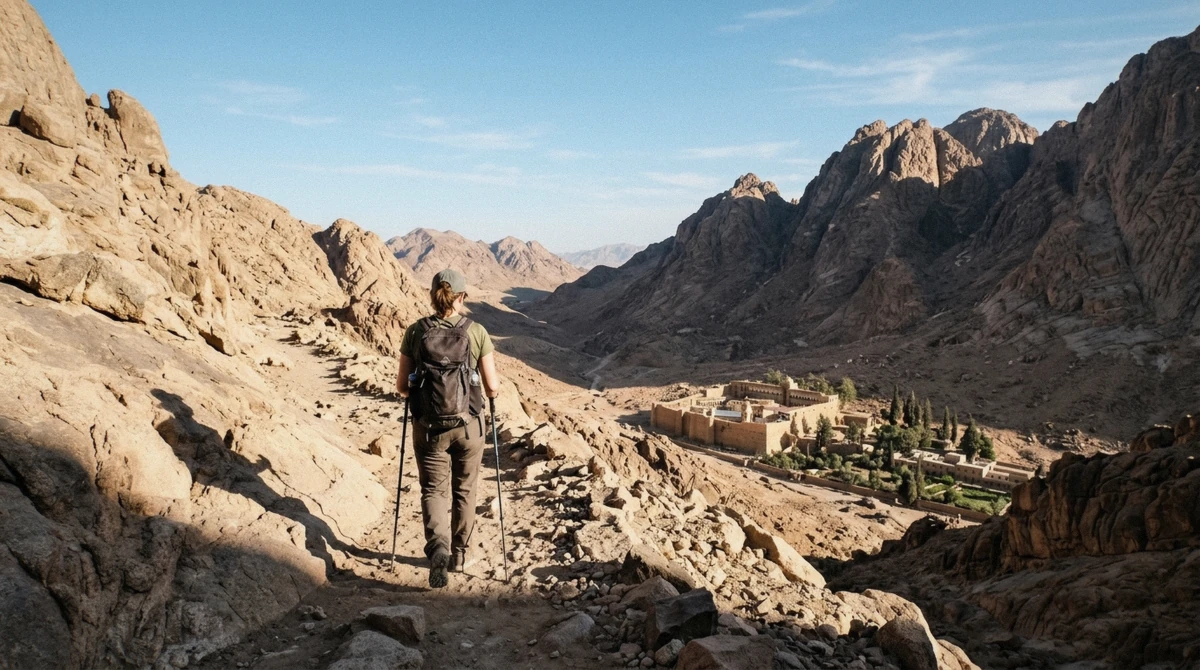
What the Tours Provide
The provided-versus-bring split varies by operator and price point, and the table below is built from each tour's own listed inclusions rather than a generic assumption.
Provided gear, tour by tour
Nothing here overpacks you: most of what a tour hands you is logistics (the guide, the permit, the transport), not clothing, so the wearable list above stays the same no matter which listing you book.
| Item | Usually provided | Bring your own | Notes |
|---|---|---|---|
| Bedouin guide and park permit | Included on every tour | Nothing | Mandatory by law; already built into every price compared here |
| Transport to and from the trailhead | Included on every tour | Nothing | Pickup runs 8 to 9 pm from Sharm on most listings |
| Water | Included on OceanAir | 1 to 2 litres on others | The most-reviewed climb from Sharm includes water; Sinai Hikes gives one bottle |
| Breakfast | Pre-ordered box on OceanAir | Add-on with tea on Sinai Hikes | The private climb with a Jebeliya guide adds an omelette breakfast for a small fee |
| Blankets at the summit | Rented on arrival, not pre-booked | About 200 EGP cash | Every operator leaves this to the hut, not the tour price |
| Headtorch | Not provided | Bring your own | No tour in the catalogue issues one |
| Camel to the foot of the steps | Optional, paid on the spot | About 250 EGP to €20 cash | Available on most routes; not on the private monastery-only day, which skips the climb |
| Monastery admission | Included on Dunas | Small ticket in pounds on others | The Spanish-speaking sunrise tour states admission included |
| Picnic or lunch box | Pre-ordered on Dunas | Not included on most sunrise tours | Ask ahead if your tour runs a full day rather than a night climb |
| Warm layers and hiking shoes | Never provided | Bring your own | Every operator's listing assumes you arrive already dressed for the climb |
What Not to Wear or Bring
A short list sourced from the actual gate rules and what tour operators say plainly is not permitted.
Most of this is common sense once you know the reasons behind it, and none of it is a generic travel-blog warning.
- Sleeveless tops: refused at the monastery gate regardless of the rest of the outfit
- Shorts: the same knee-and-shoulder rule applies to men and women alike
- Sandals or flip-flops: no grip on loose gravel and worn stone steps in the dark
- Cotton-only outfits: soaked base layers cool fast once you stop moving at the summit
- Drones: not permitted at the monastery or on the mountain route
- Alcohol: not part of any tour compared here, and out of place at a religious site
- A phone as your only light source: batteries drain fast in the cold, carry a real headtorch
Packing by Season
The base layering system doesn't change with the season; what changes is how many layers go over it and how seriously you take the wind.
Saint Catherine's climate swings widely enough across the year that the same base layer needs very different amounts on top of it, from a light fleece in September to a real winter coat in January.
| Season | Wear this |
|---|---|
| Autumn (September to November) | Base layer, fleece, windproof shell; gloves optional after October |
| Winter (December to February) | Base layer, insulated jacket, windproof shell, hat and gloves; summit runs near freezing |
| Spring (March to May) | Base layer, fleece; drop the insulated layer by April as daytime highs climb |
| Summer (June to August) | Base layer, light windproof shell; a sweatshirt was enough for one climber on 30 July, but pack it anyway |
Dress Code at the Monastery Gate
The rule is plain and non-negotiable, and it applies after the climb, not before it.
The monastery's own rules are direct: shoulders and knees covered, sleeveless tops refused at the door, and no photography once you're inside the church. Sinaimonastery.com's general information page states the dress code directly, and the July 2026 reviewer who arrived in shorts after the climb was turned back at the gate until borrowed trousers were found, a cautionary example rather than a rare one. Guides explain the rule before groups reach the gate, but the layer has to already be in the bag: there is no changing room at the entrance.
What to Pack, by Traveller
If You're doing this hike for the first time
Wear ordinary layered hiking clothes, nothing technical, and carry the monastery layer in a small day bag from the start. See climbing Mount Sinai for the first time for the full walkthrough.
If You're a woman planning the monastery visit
The dress code is the same as for men: shoulders and knees covered, no sleeveless tops. A light scarf covers both the summit wind and the gate rule in one item.
If You feel the cold more than most
Add a hat and gloves regardless of season, and don't count on the rented blanket alone; the hut can sell out on a busy night.
If You want to pack as light as possible
Skip the spare layers and lean on the private climb with a Jebeliya guide, which lets you set a faster pace and spend less time standing still in the cold.
If You're travelling with children
Pack an extra warm layer for a child who tires faster and cools down faster once they stop moving on the summit.
What to Wear: Frequently Asked Questions
Can I wear shorts on the Mount Sinai hike?
Practically, yes, for the climb itself in the dark, though most people are already in trousers for warmth. What matters is carrying long trousers for the monastery visit afterward: shorts are refused at the gate regardless of what you wore on the way up.
Do I need hiking boots for Mount Sinai?
Boots aren't mandatory, but closed-toe shoes with real grip are; trail runners or light hiking boots both work well on the loose gravel of the camel path and the worn stone steps. Sandals and fashion sneakers are the two to avoid.
How cold is the summit of Mount Sinai at sunrise?
Near freezing from December to February, and still cool enough for a sweatshirt in the middle of summer; one reviewer found a sweatshirt enough under a full moon on 30 July. Wind on top makes it feel colder than the thermometer suggests.
What should women wear to St Catherine's Monastery?
The same as men: shoulders and knees covered, no sleeveless tops. Long trousers and a top with sleeves, or a scarf big enough to cover both, satisfy the rule without adding weight to the climb.
Do the tours provide blankets on Mount Sinai?
No tour includes a blanket in its price; they are rented on arrival at the last hut before the final steps for about 200 Egyptian pounds, cash only. Bring your own warm layers rather than counting on one being available.
Can I bring a drone or a tripod?
A drone is not permitted at the monastery or on the mountain route. A tripod isn't restricted in the same way, but the no-photography rule inside the church applies regardless of what you're holding.
Getting dressed for this hike is really three small decisions: what keeps you warm on the way up, what keeps you decent at the gate, and what you're willing to carry for both. Once the bag is packed, the comparison of Mount Sinai climbs covers what actually happens on the night itself, and St Catherine tour listings line up every operator's price and inclusions side by side.